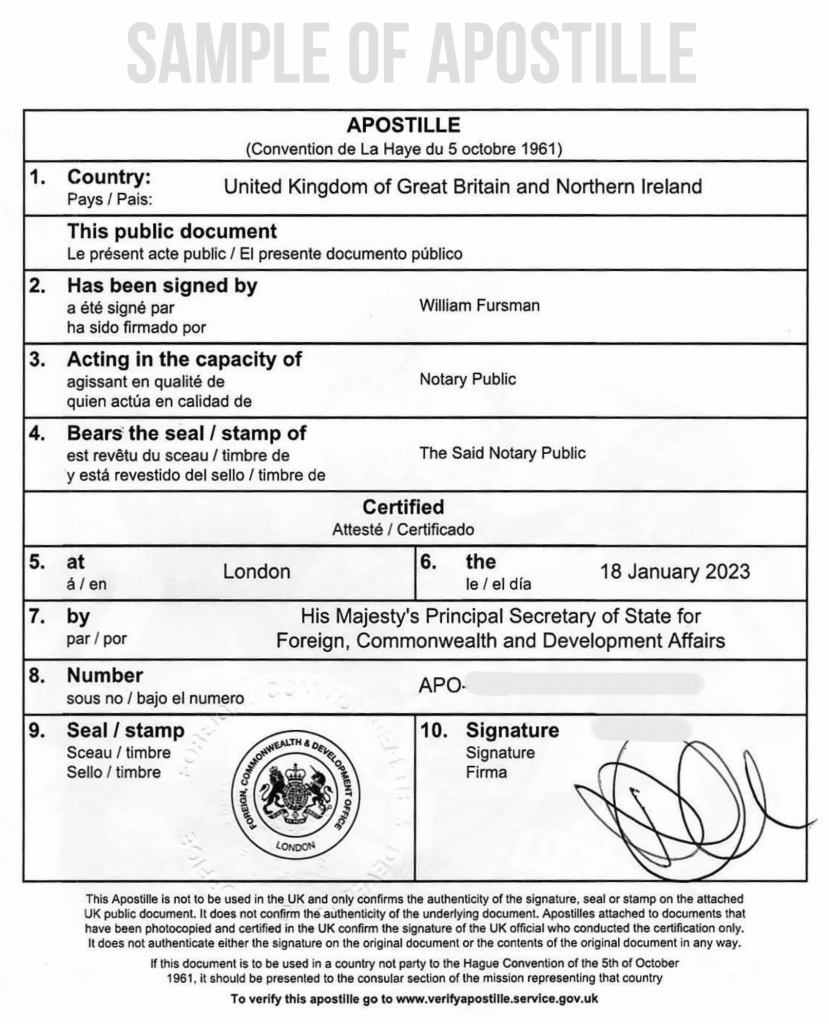

Technically, an apostille is a verification stamp. It confirms in what country document was issued and signature and/or seal of the issuing authority or person and in what capacity the person signed said document. Each apostille has a unique number and also has a link to the official website, so when presented abroad, the apostille could be checked by relevant officials.
The apostille does not confirm the content of the document, but it does confirm the signature of a notary, solicitor, government official, medical practitioner or court’s seal. The document and its content is confirmed by the person who issued and/or signed it. Any country which ratified the Hague Convention of October, 5 1961 has to accept the document issued by another country-signatory to the Hague Convention and no further legalization by the Embassy / High Commission or otherwise is required. Here is the list of all countries -signatory of the Hague Convention of October, 5 1961. Here
However, if you are planning to use a document in the country which did not sign the Hague Convention, you’ll need to take a document to that country's Embassy or High Commission. NATADAN LIMITED can assist you with Embassy legalization too. We can also order any duplicate/copy of an original from the Company House, Registry Office or other government institutions on your behalf. We are here to help!